2026-10-14
Calf raises: your knee changes the exercise
Your heels do the same job, but knee position changes the setup. Learn the calf-muscle distinction, a supported comparison and cues for controlled raises.
Tip Top Fitness · Exercise form · Guide 3
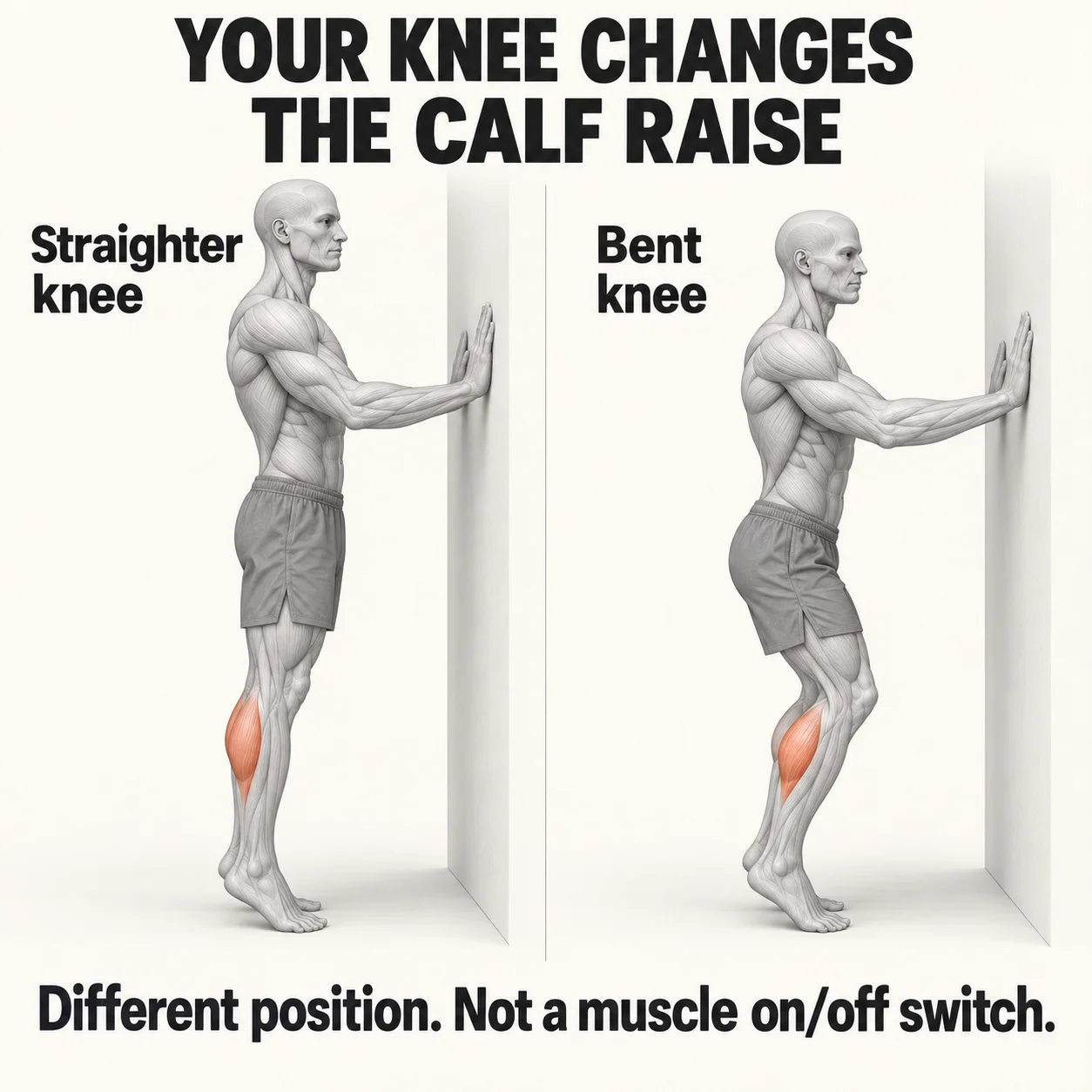
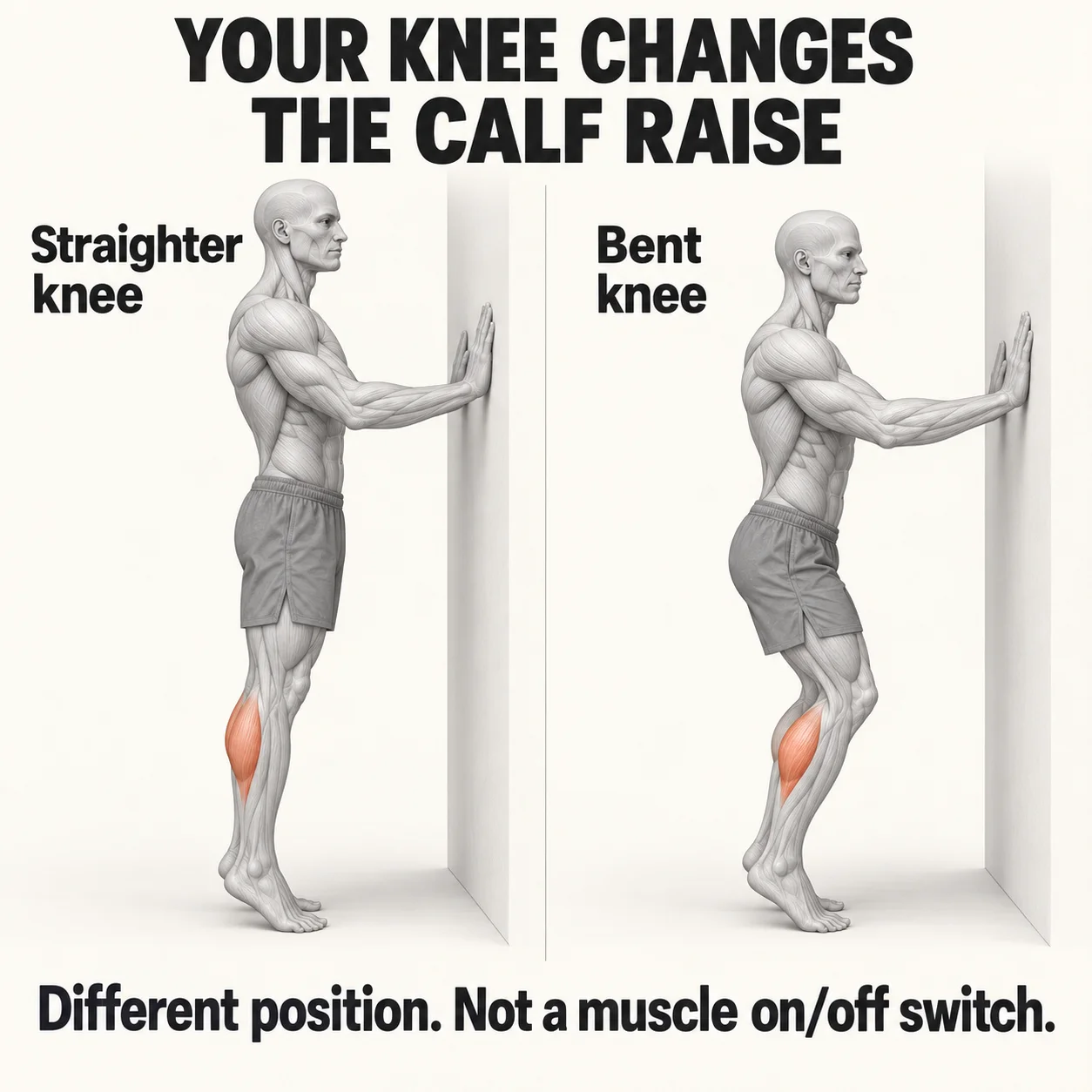
Your knee matters in an exercise that looks like it happens only at the ankle. A calf raise with straighter knees and one with bent knees are not interchangeable setups—even if the heels rise the same distance. But the common shorthand “straight knee = one muscle, bent knee = another” is too tidy.
The overlooked detail: not all calf muscles cross the knee
The gastrocnemius crosses both the knee and ankle; the deeper soleus does not cross the knee. At a comparable ankle position, straightening the knee lengthens the gastrocnemius relative to bending it. Knee position changes the setup, not an on/off switch. A 2023 primary calf-training study helps show why that distinction matters.
Fourteen untrained young adults trained one leg standing with the knee extended and the other seated with the knee bent to 90 degrees, using loaded machines for 12 weeks. Gastrocnemius growth was greater in the standing condition; soleus growth was similar between conditions. That does not make seated raises useless or prove a better result for every person.
The diagram shows a shallow standing bend, not that study’s seated exercise. A few bodyweight repetitions cannot reproduce its training results, identify which muscle is working most, or predict your progress.
Start with support, not a balance challenge
Use a level, dry, nonslip floor beside a fixed support you can comfortably hold. Avoid movable furniture, glass or a door that can open. Worcestershire NHS guidance uses a solid surface such as a kitchen worktop. A stable wall can provide light contact as illustrated; choose stronger support if needed. This guide starts on the floor, not with heels hanging off a step.
Make a controlled calf raise
Stand facing your support with feet roughly hip-width apart and both heels down. Keep a comfortable upright posture and look ahead. Start with knees comfortably nearly straight, without pushing them backward. Keep both hands available for support and breathe normally.
Slowly lift both heels to a comfortable height, keeping the front of each foot in contact with the floor. Lower the heels gently and reset. NHS calf-raise guidance emphasizes a slow, controlled lift within a comfortable range. Think “lift quietly, land quietly,” rather than bouncing to get higher.
Try a small comparison—only if the first version feels steady
Do two or three easy supported raises with nearly straight knees, then rest. Keeping the same support and foot position, try a shallow, comfortable knee bend. Hold that bend while lifting and lowering the heels slowly. Do not repeatedly straighten the knees to help lift: that changes the comparison into a different movement.
Notice control, comfortable height and how the task feels—not whether you can manufacture a stronger “burn.” The two versions may feel different, similar or awkward. Sensation is not a muscle-activation measurement. If the bent-knee version is less steady, skip it; no demonstration is worth losing balance.
Three useful things to watch
Bouncing: slow down and reduce the lift until you can lower quietly. Changing knee bend halfway through: choose one comfortable position for the repetition. Feet rolling onto an edge or one side rising much higher: shorten the range and re-establish steady support instead of forcing height. These are adjustment cues, not a diagnosis.
An easier option
Keep both feet working, use your stable support and make a smaller heel lift. You do not need single-leg raises, extra weight or a step to practice the movement. If even the smaller supported version is uncomfortable or balance is uncertain, get individual guidance instead of removing support to “progress.”
When to stop
Stop for pain, dizziness, unusual symptoms, slipping or loss of balance. Do not push through Achilles, foot or knee pain to finish a count. An injury, recent surgery or medical exercise restriction needs advice from your treating clinician before using a general guide. This is exercise education, not a rehabilitation prescription.
The takeaway worth sharing
Record the version, not just the repetitions: “calf raises” leaves out knee position, support, range and load. Save the diagram for your next training conversation, or share it with someone who thinks changing knee bend simply switches one calf muscle off.
For another setup adjustment, see wall push-ups and foot distance. For help choosing exercises as part of a whole plan, explore strength training in Santa Barbara, beginner coaching or in-home training. Text Laurence using the button below about a $60 first full-hour session.