2026-11-11
Rest between sets: give your next set a chance
Rest can help you repeat controlled work. Learn what to check between sets, how to compare pauses safely, and why a timer alone cannot decide when you are ready.
Tip Top Fitness · Training question · Guide 6
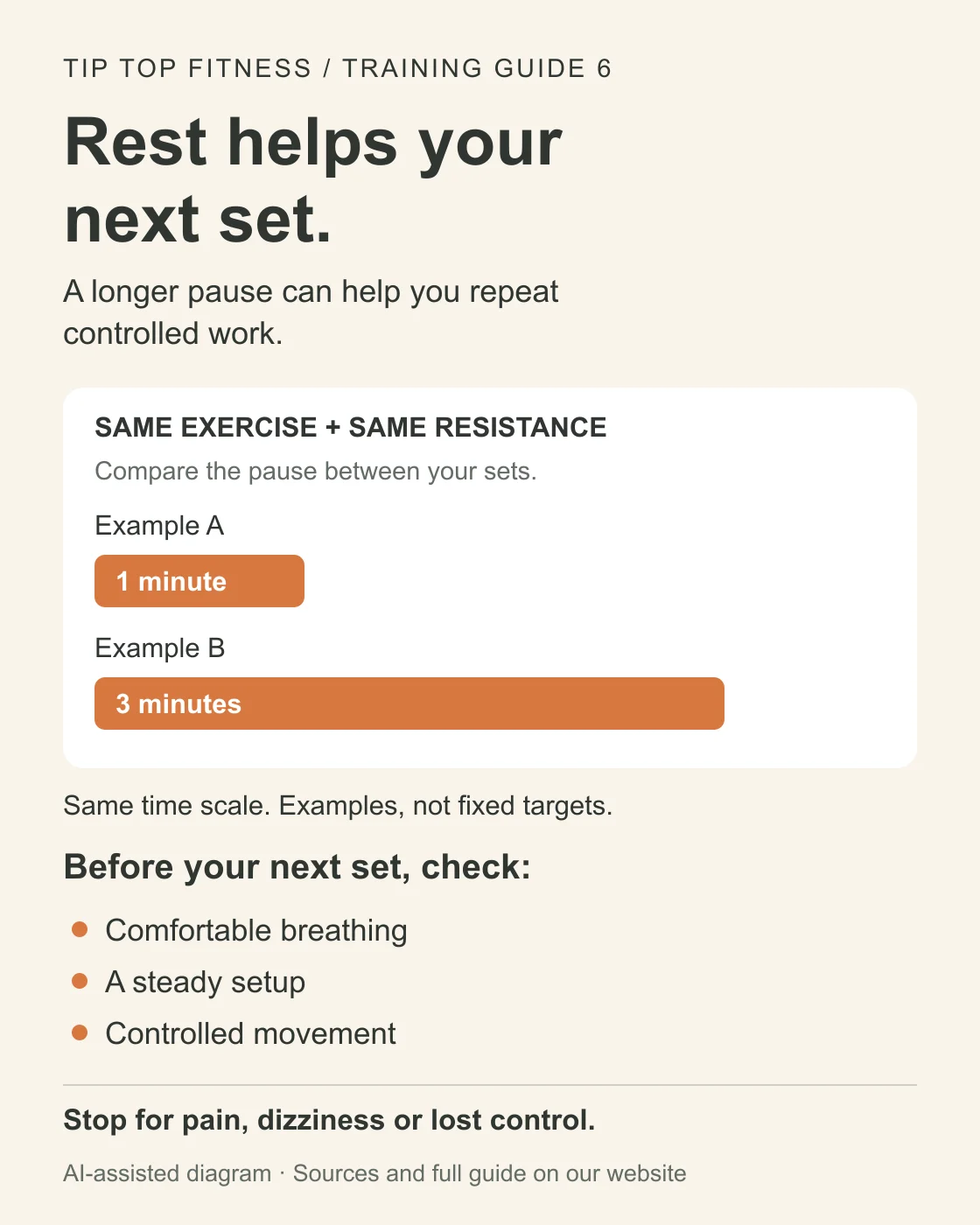
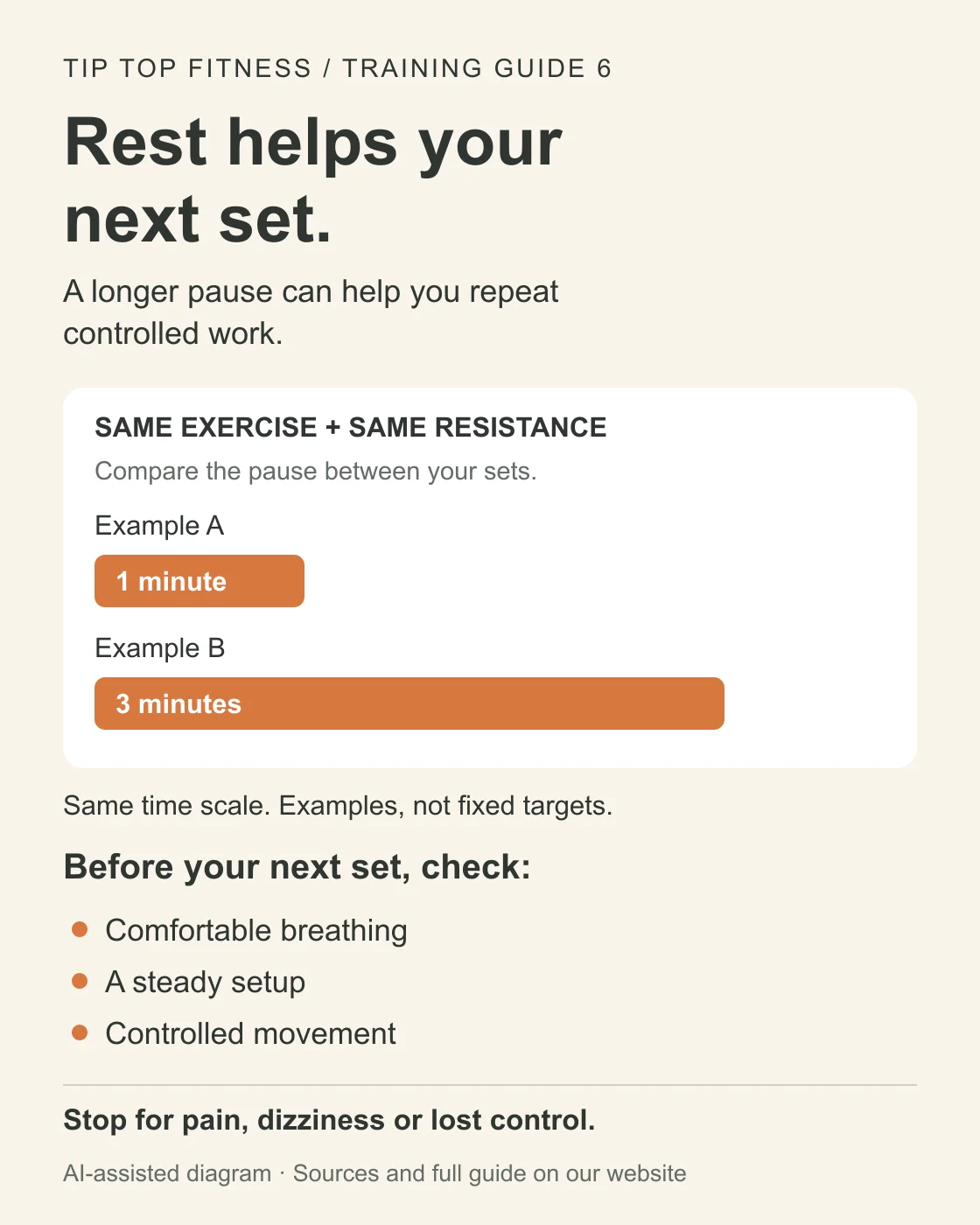
Resting longer can help you do more controlled work in the next set. That pause is part of the training plan: the resistance, repetitions and recovery time together shape the task. If each set is getting rushed or harder to control, check your rest before assuming you need more effort or a heavier weight.
Why a pause can change the next set
Fatigue from one set can limit what you can repeat in the next. In a study of near-maximal bench pressing, participants completed more repetitions with two-, three- or five-minute rests than with one-minute rests. That was a specific heavy-lifting test, not a beginner prescription. It illustrates why a shorter workout clock does not necessarily mean more useful work.
A separate eight-week randomized study assigned 21 young, resistance-trained men to one- or three-minute rests. The longer-rest group had greater gains in squat and bench-press strength. This small, specific sample cannot establish the best pause for every person, exercise or goal. It also does not mean everyone needs to copy a demanding research routine.
The 2026 American College of Sports Medicine guidance emphasizes regular resistance training and individualizing the plan. You do not need to chase an exact rest time or train to failure to make a worthwhile start.
Set up a useful comparison
Choose a familiar exercise and a manageable resistance from your existing plan. Keep the equipment, setup, movement range and intended repetitions consistent. Use a simple timer and note the pause alongside the repetitions and how the set felt. A coach-prescribed rest interval takes priority over this general example.
Start with your usual comfortable pause; do not deliberately shorten it to make a harder test. At a comparable session, try a little more rest before the next set while keeping the other details similar. Ask whether your breathing settled, your setup stayed steady and your repetitions remained controlled. Finish with room for another controlled repetition rather than forcing a maximum.
One comparison is a clue, not proof. Sleep, exercise order, resistance and the first set all affect the next one. Keep a few notes across sessions and discuss the pattern with your trainer. If a longer pause helps you maintain control, that is a useful reason to keep it even without a new personal best.
Use the timer as a check-in
When the timer finishes, check that your breathing is comfortable, your stance or support is steady and you can begin without rushing. Take longer if you need it. Feeling less breathless does not guarantee that the working muscles are ready; the quality of the next repetitions matters too. Heavy or demanding exercises may need a different pause from an easy practice set.
Common mistakes and an easier option
Avoid filling every pause with more work for the same tired muscles and calling it rest. Do not compare sessions after changing the resistance, pace and pause together. If your time is limited, choose fewer planned sets with your trainer rather than hurrying every transition.
The easier option is a lighter resistance, fewer manageable repetitions or a simpler familiar version of the exercise. A longer pause cannot make an unsuitable load appropriate. Stop a set when control begins to go, even if the planned count is unfinished.
Stop signs
Stop for pain, dizziness, faintness, feeling unwell, unusual breathlessness or loss of control. Do not restart simply because a timer says to. NIH activity guidance recommends starting gradually, listening to symptoms and getting individual advice for health conditions or injuries. Persistent or concerning symptoms need medical advice, not a different rest interval.
What to take into your next session
Record rest as well as resistance and repetitions. Give yourself enough recovery to repeat the movement you intended. The earlier guide on progressing repetitions before weight explains what else to keep consistent.
For help choosing a manageable exercise and recovery plan, explore one-on-one strength training in Santa Barbara or text Laurence to arrange your first session. Training is adapted to your starting point and goals.